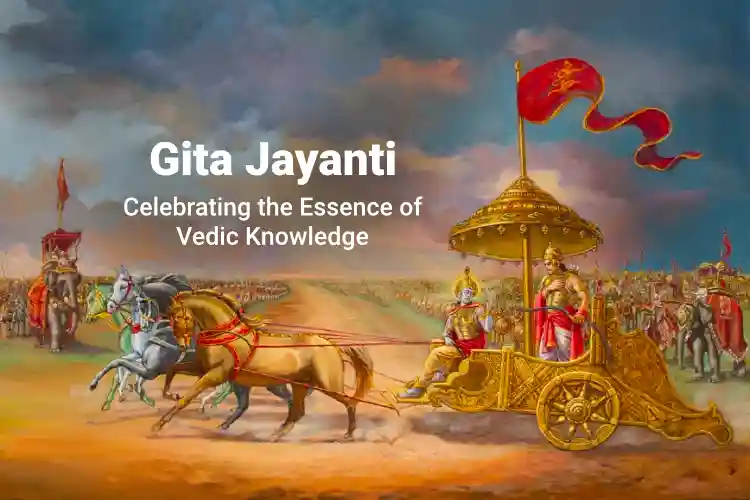
Bhagavad Gita Jayanti: A Timeless Wisdom Celebration
In a world where ancient wisdom intertwines with modern relevance, there exists an occasion that resonates as deeply profound for spiritual seekers worldwide—the celebration of Bhagavad Gita Jayanti. Today marks the advent anniversary when Lord Krishna imparted his timeless knowledge to Arjuna during what is now known as The Battle of Kurukshetra—a pivotal moment in Indian history and a turning point where wisdom met destiny.
Gita Jayanti, or simply "the day when Bhagavad Gita was born," holds significant importance not just for devotees but also for scholars, philosophers, and those seeking to understand the profound teachings that have guided countless lives. This sacred date serves as an annual reminder of Lord Krishna’s grace in bestowing one of humanity's greatest spiritual treasures—The Bhagavad Gita.
Every year on this auspicious day, practitioners gather across India and around the world for rituals, discourses, and recitations, all aimed at reconnecting with these divine verses that continue to inspire every generation. As we approach another celebration in 2025 (estimated date of Dec 1), let's delve into what makes Bhagavad Gita Jayanti so special.
What does this day mean for those who cherish the teachings? For starters, it is a testament to Lord Krishna’s unparalleled wisdom and devotion. The fact that He chose Arjuna as his disciple at such a crucial juncture underscores the importance of His message—teaching us how one can live with purpose amidst chaos.
As you celebrate or learn about Bhagavad Gita Jayanti this year, consider joining in various festivities to honor its legacy. Perhaps it could be through chanting mantras, meditating on verses from the Gita itself, engaging in a personal reading of select chapters for deeper understanding and integration into daily life. Reflecting upon these ancient words can help us navigate our own paths with greater clarity.
With every passing year marking Bhagavad Gita Jayanti, we honor not just this particular date but also that eternal essence which will forever resonate within the souls who seek spiritual growth and enlightenment—understanding love transcends time and space. In a world often consumed by distraction, these teachings offer solace and direction for all seeking meaning.
Today is more than an occasion of celebration; it's a call to action—to take these invaluable lessons into our lives daily. As we prepare ourselves spiritually ahead of this auspicious day, may the divine wisdom carried through The Bhagavad Gita inspire us on the path forward.
The Full Story of Bhagavad Gita Day
Today marks another year in what has become an annual celebration that resonates deeply within spiritual circles—the commemoration of the birth anniversary or "Jayanti" of Srimad Bhagavatam (also known as The Bhagavad Gita). As a pivotal text, this day serves not just to acknowledge its publication but also to revere and reinforce the profound teachings it carries.
This year, celebrations around the world have taken on an extra special tone. After years of trials in various jurisdictions—most notably within Russia for Prabhupada's Bhagavad Gita As It Is—the atmosphere is one where discussions, debates, and even criticism often swirl around The Bhagavad Gita itself as a symbol of spirituality versus extremism.
Key Developments
The trial initiated in June 2011 over the Russian edition was indeed novel. Scholars from Tomsk State University had concluded that Prabhupada's commentaries fomented religious, social, and racial intolerance. The Indian government's decision to ban this book sparked controversy not only domestically but also internationally through media coverage.
As for your roommate drama in Pune, it is a deeply personal situation impacting relationships and family dynamics. Such internal conflicts within one’s own community or studies can provide insight into how societal pressures manifest among young people who are drawn towards spiritual paths like ISKCON (International Society for Krishna Consciousness). Their choices often reflect the impact of familial influences combined with existential quests.
Multiple Perspectives: Different Views, Expert Opinions
Scholarly Perspective
From a scholarly standpoint, discussions over whether The Bhagavad Gita should be banned or celebrated continue. Scholars argue that while it might contain elements prone to extremism in its interpretation and application, when viewed through the lens of ancient wisdom and universal philosophy, these texts offer invaluable guidance for personal growth.
For instance, Ramakrishna Paramahamsa once said, "The Bhagavad Gita is not a book about Krishna; it's a conversation between two friends." Such an approach encourages readers to focus on its timeless lessons rather than get bogged down in the supernatural aspects. By focusing instead on universal teachings such as karma yoga (striving for selfless service), bhakti (devotion to God through personal sacrifice and ritual practice), these ideas remain accessible across cultures, historical contexts.
Personal Story
In contrast to scholarly debates, let's consider a personal narrative: As someone who is deeply connected with the spiritual journey of The Bhagavad Gita but lives in an environment where similar teachings are part of daily life (as might be seen at home or within one’s community), there could indeed arise conflicts. These situations aren't uncommon and often reflect challenges people face when aligning their beliefs closely.
An analogy from everyday experience—like working with colleagues who have different religious practices can lead to tensions, misunderstandings, and debates about work-life balance—is akin to the roommate scenario described earlier but on a broader scale. Understanding these dynamics through The Bhagavad Gita’s teachings could offer relief or at least perspective for navigating such conflicts.
Broader Context: How This Fits into Larger Trends
The trend of discussions around religion in today's world is complex and multifaceted, often centered around themes like cultural preservation versus enlightenment, religious extremism vs. universal wisdom, and the role of spirituality within daily life. The Bhagavad Gita serves as a constant reminder of how these issues intersect.
As society becomes more globalized and diverse, so too do interpretations become varied—some taking it at face value while others may seek deeper meaning beyond its literal narratives. However, no matter one's background or approach to understanding, the core message remains universal: The importance of service (Karma Yoga), selfless action guided by love for all beings.
Real-World Impact
On a broader scale, these celebrations and debates impact communities directly—whether through local events organized around Bhagavad Gita Day in India, scholarly discourse at international conferences, or perhaps even personal conversations within families. The shared narratives can facilitate dialogue between different faiths as people search for common ground.
Moreover, such occasions encourage reflection on our own lives—to see how principles from ancient texts align with contemporary challenges and aspirations—an invitation to consider whether these teachings continue relevant today and what it might mean moving forward in one’s journey of self-discovery. In essence, Bhagavad Gita Day stands as a beacon illuminating the enduring relevance of timeless wisdom.
Conclusion
In conclusion, while discussions around banning or celebrating The Bhagavad Gita may seem superficial at first glance, they represent deeper inquiries into how religion intersects with our modern worldviews and values. For those like your roommate facing personal dilemmas in their spiritual journey—and for many others seeking meaning amidst complexities—understanding can emerge from such conversations.
Ultimately, what matters is not just adhering to rules but interpreting texts thoughtfully within the context of one's own life—a practice guided by compassion towards all beings and dedication to truth. As always with sacred teachings like The Bhagavad Gita—if we approach them humbly yet earnestly—we can uncover profound insights that resonate across time, culture, and circumstances.
In a world where ancient wisdom intertwines beautifully with modern relevance, the celebration of The Bhagavatam's divine birth anniversary remains as vital today as it was millennia ago—each year offering new opportunities for reflection and growth.
Summary
In conclusion to our exploration of Bhagavad Gita Day, we've journeyed through its rich history, significance, and ongoing relevance in today's world.
We saw how this annual celebration serves as a testament to the enduring wisdom contained within The Bhagavatam—Srimad Bhagavatam. As one who celebrates it annually marks not just the date of publication but also renews their commitment to its teachings. It stands as a beacon that invites us all, irrespective of our beliefs or backgrounds, into this sacred dialogue.
The trials and tribulations around The Bhagavad Gita in recent years—both domestically within India itself and internationally through global media coverage—are emblematic of larger conversations about religion's place in modern times. These debates bring to light the complex interplay between ancient wisdom with contemporary concerns like extremism, social tensions, and cultural pluralism.
As we anticipate another year marked by Bhagavad Gita Day celebrations globally—whether it be through rituals at temples or scholarly discourse online—we must also consider how this tradition adapts for future generations. What lessons can we draw from past challenges to enhance our collective understanding? How do interpretations evolve under diverse contexts while maintaining core tenets?
Ultimately, as the world continues to grapple with its own spiritual and existential questions, Bhagavad Gita Day stands as a reminder that timeless wisdom is ever-relevant—and perhaps closer than one thinks. It invites us all into this sacred conversation—whether we're living it within our personal lives or studying these teachings for deeper understanding.
And so, what profound insights have you gained about Bhagavad Gita Day today? I encourage everyone to explore further and find ways to incorporate its lessons in daily practice—an invitation to embrace the divine presence woven through ancient verses.
In essence, as we celebrate this day—let us reflect on our own journeys towards understanding and embodying these timeless principles—a call for a world more united by love than divided by differences.
With that thought, let's end with one final question: How can Bhagavad Gita Day inspire personal growth and contribute to global harmony?