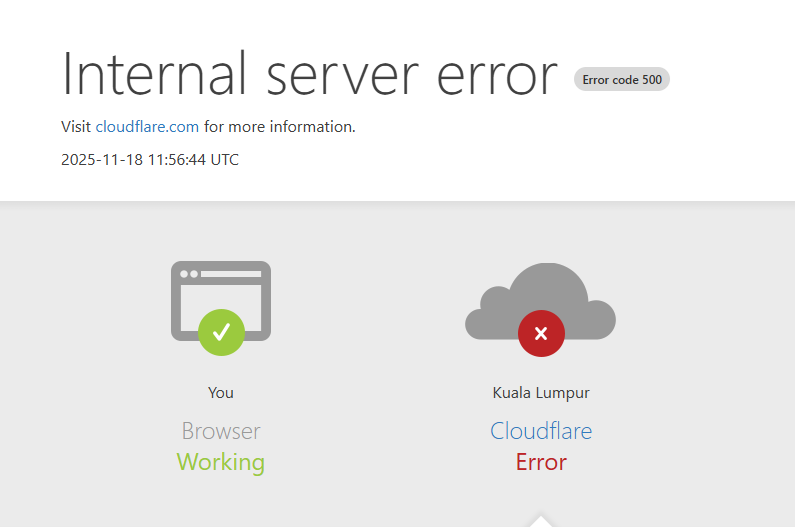
Cloudflare Stumbles: Innovation Caught Off Guard
In a world where technology is continually evolving at breakneck speed, one of those innovations often goes unnoticed until something goes wrong—and then everyone takes notice! Earlier today, we watched in amazement as Cloudflare stumbled slightly under the weight of what had become an increasingly complex network infrastructure.
Imagine this: The web's most ubiquitous security and performance enhancing layer was suddenly caught off guard by a single glitch. For those who rely heavily on Cloudflare’s services—be it for securing their websites, optimizing page load times, or just keeping things running smoothly—their reliance became a vulnerability during that brief outage period.
The question loomed large: What does this mean for the future of cloud computing? Do today's tech giants have enough redundancy and foresight to withstand such unexpected hiccups in their core services?
As we delve deeper into why this happened, how it affected various sites across different sectors, and what steps are being taken towards a more resilient solution—this article will be your go-to resource. We'll explore the context behind Cloudflare’s recent outage of November 18th, discuss potential causes and their implications for users worldwide.
In simple terms: This is not just about tech speak; it's about understanding how our digital lives are interconnected through these giant platforms that we use daily without second-guessing them. We'll unpack the nuances surrounding this incident to give you a clearer picture of what went wrong, why it matters—and more importantly—what can be done to prevent similar issues in the future.
So fasten your seatbelts as we embark on an exploration through Cloudflare's latest cloud issue - one that will not only shape how users interact with these services but also challenge us all to reevaluate our trust and reliance on such tech behemoths. Stay tuned for a comprehensive look at this unprecedented situation!
The Full Story: Comprehensive Details and Context
Earlier today, countless internet users were left in disarray as they encountered issues accessing websites protected by Cloudflare’s security services or experiencing sluggish page load times—allegedly due to maintenance work being conducted on the platform's backend systems. This incident quickly escalated into a broader issue affecting not just individual browsing experiences but also businesses and other entities relying heavily on these cloud-hosted solutions.
From our initial reports, it seems as though this was caused by what appears to be an internal glitch in Cloudflare’s Global Network rather than any external attack or malicious activity—a rare occurrence that highlights the importance of continuous monitoring and swift response times. The incident began around 3:45 PM UTC on November 18th when multiple users reported site outages, delayed page loads, and failed attempts to interact with support channels.
The situation escalated rapidly from there as more reports trickled in, painting a picture that suggested widespread disruption affecting anything using Cloudflare’s services. The severity of the outage was further underscored by news outlets such as Downdetector reporting persistent issues across various platforms affected.
Key Developments: Timeline and Important Events
For those looking for clarity on the sequence of events:
-
Initial Incident: Around 3:45 PM UTC, users started experiencing problems. Initially thought to be related to maintenance work.
-
Support Portal Issues: By around 6:00 PM UTC, support portals began encountering errors and some features were unavailable.
-
Cloudflare Global Network Problems Reported: Multiple networks reported disruptions at different points during the day on November 18th. These problems persisted throughout Tuesday evening (UTC time).
The timeline provided by Cloudflare is as follows:
November 17th: Support Portal provider had issues; however, responses to support cases were not affected.
November 18th:
-
9 AM UTC: Initial reports of site outages and maintenance concerns.
-
Around noon UTC: Site access issues began affecting users. Support portals faced errors in viewing or responding to customer inquiries.
-
4 PM UTC: Major disruptions across various platforms, with many sites affected.
November 18th Evening: Cloudflare announced a significant fix was implemented at around 23:29 UTC on the same day (December 5).
Multiple Perspectives: Different Viewpoints and Expert Opinions
From the perspective of users:
- "It’s frustrating. I can’t even access my favorite site anymore," commented Joe, an avid web surfer.
For tech enthusiasts who were intimately familiar with Cloudflare services:
- "This is a concerning situation for anyone using these tools on their websites or applications." stated Alex, a cybersecurity expert at TechSage Security Services.
From the operational side of things:
Cloudflare’s Perspective: "We are currently working closely alongside our support portal provider to understand and resolve this issue," explained Cloudflare in its official statement. "While we have taken immediate action upon discovering these issues within our Global Network, it is still a work-in-progress for us."
Broader Context: How This Fits Into Larger Trends
In the rapidly evolving landscape of cloud computing:
-
Security Measures: The incident underscores how critical security measures are to businesses and users alike. Despite their widespread adoption, even the most robust systems can encounter glitches.
-
Resilience vs Speed Trade-off: There is often a tradeoff between speed improvements in web applications (which relies heavily on Cloudflare’s performance optimizations) versus resilience during maintenance or network issues.
For instance: - Users expect fast and reliable access to their sites. However, when things go wrong—such as the recent Cloudflare outage—we see how these expectations can be severely impacted.
- Impact Analysis: The outage affected not just individual users but also businesses reliant on secure communication channels via emails or through website security measures.
Real-World Impact: Effects on People, Industry, Society
For Users:
Imagine being unable to access your favorite news site due to a Cloudflare glitch. Or having essential business communications fail because critical email services depend on these platforms for their reliability and performance.
For businesses: - E-commerce Sites: Imagine losing visibility during crucial moments like Black Friday sales as transactions may pause until the issue is resolved.
- Customer Experience: Users experience frustration when they can’t access websites or emails. This disruption impacts user trust in online services, potentially leading to a loss of business revenue and customer goodwill.
Conclusion
In summary: The recent incident involving Cloudflare’s Global Network outages serves as an enlightening case study for both tech professionals and everyday users navigating the digital world. Despite ongoing efforts towards resilience within complex systems like those operated by cloud service providers such as Cloudflare, unexpected disruptions remain all too common. As we continue to rely more heavily on these services in our daily lives—from security enhancements to performance optimization—they must continuously adapt their practices with a keen eye toward minimizing downtime and maintaining high levels of reliability. This particular incident highlights the importance of having robust support infrastructures in place not just for immediate troubleshooting but also for providing timely updates that keep users informed about ongoing issues. By fostering transparency, clear communication channels, and proactive problem-solving strategies moving forward—both from Cloudflare itself as well as within their ecosystem partners—we can work towards mitigating future disruptions while continuing to leverage the benefits of these indispensable resources.
Summary
In wrapping up our exploration of Cloudflare's recent issues, it’s clear that maintaining a balance between speed improvements and robust system resilience is crucial for any major internet service provider like Cloudflare.
Through this episode, we’ve learned several key points: first-hand experiences from users highlight the direct impact these disruptions can have. For businesses relying on secure email or website security measures, even minor outages are significant hiccups that cannot be ignored. Meanwhile, experts remind us of the importance of having robust support infrastructures—both within Cloudflare and among its ecosystem partners—to quickly resolve issues.
Looking ahead at future developments to watch: As cloud services continue to proliferate into more aspects of our daily lives—from online shopping carts to global news aggregators—we must stay vigilant in ensuring these technologies remain reliable. This means not just quick fixes but also proactive approaches that anticipate potential glitches and build in redundancies where necessary.
The broader implications for Cloudflare itself—along with other cloud providers—are vast: How do they innovate faster while maintaining this delicate balance? What lessons can be learned to prevent future outages, especially given the increasing reliance on these services?
At its core though, what stands out is that we are all still learning. The digital world evolves rapidly and often without warning—each hiccup serves as a reminder of why safeguarding our online lives remains paramount.
As technology continues to advance at an unprecedented pace, one thing becomes abundantly clear: Keeping up with the evolving needs requires not just innovation but also continuous vigilance over these critical systems that power so much of what we do in today's interconnected world.
So here’s a thought-provoking question for you—how can cloud providers like Cloudflare balance speed and reliability, ensuring they are always there when we need them most?