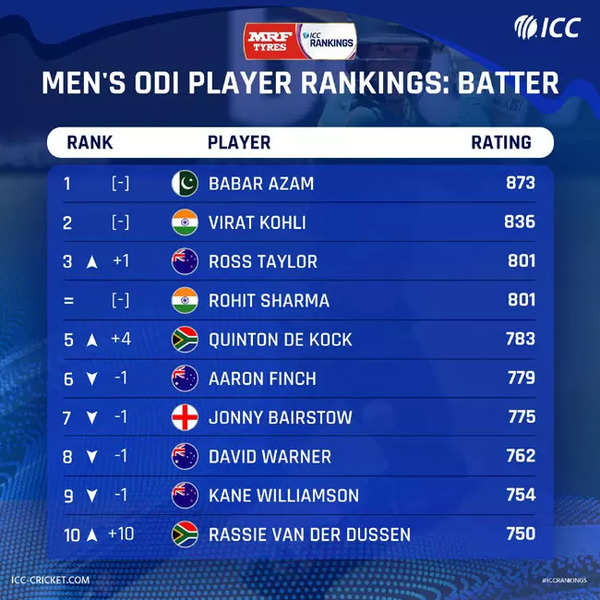
Every Match Counts in ODIs: Where Rankings Reign
Welcome to a world where every match counts – one extra run or wicket can make all the difference in cricket's pinnacle format for international teams: One Day Internationals (ODIs). In this competitive arena of 50 overs per side and limited powerplays, ODI rankings play an integral role. Today, we’re diving deep into these coveted standings that dictate where each team ranks among their peers.
The ICC Men’s ODI Team Rankings are the official hierarchy for One Day International cricket teams worldwide. It's not just about who makes it to a tournament; behind-the-scenes, these rankings determine everything from which sides can qualify or earn spots in prestigious events like the World Cup and Champions Trophy. With every match that counts towards points, we see our favorite nations rise up—or fall when their form falters.
Why should you care? Because being near or at the top of this chart means more than just bragging rights; it translates to greater opportunities for your national team’s players on the global stage. These rankings often correlate with winning potential and can influence who gets picked in various international squads, thereby impacting entire career paths.
Now let's take a look at what we'll cover as we delve into this captivating world of ODI rankings:
- Understanding How Points Are Awarded: We’ll explore how matches contribute to these standings - whether it’s winning by margins or accumulating points from opponents.
- Key Influencing Factors on Rankings : From match outcomes and powerplay management, through individual performances to broader team dynamics – we'll examine what really makes a difference in ODI rankings.
- Team Performance Analysis: By looking at recent tournaments and historical data, we’ll break down which factors consistently contribute to higher positions across teams from different regions.
Odds are good you’ve seen these numbers swirling around during coverage of international cricket matches or watched highlights reels – but what lies behind those points? How does one team keep staying on top while others fall off their perch?
Let’s unravel the mysteries and take a closer look at these crucial rankings, as they reflect both skill and strategy in this thrilling realm where every match counts. Join us for an insightful journey through the world of ODI Team Rankings!
The Full Story: Comprehensive Details and Context
In the realm of ODI (One Day International) cricket, where every match is as pivotal as it could be in deciding destiny at home or away from them, standing tall on top rankings becomes an essential part of each team's psyche. Currently, AB de Villiers holds the record for being the highest ranked ODI batsman with a staggering 38. This number has not only defined his career but also serves as a benchmark and aspiration for many young players aiming to make their mark in this format.
Key Developments: Timeline, Important Events
The journey from AB de Villiers’ early days under South Africa’s banner until he reached such heights cannot be understated. In 2006 at just the age of 19, De Villiers made his debut for the national team and since then has become an integral part of their batting lineup consistently. His ability to score runs quickly, play confidently under pressure, and adapt on any surface have been instrumental in maintaining South Africa’s position at the top.
Another notable development came with India emerging as a formidable ODI force. Under Virat Kohli's leadership, they surpassed Australia for most ODI wins globally from 2015 to early 2023, propelling them to new heights on both domestic and international grounds. This shift not only reshaped the competitive landscape but also influenced how other teams strategize their matches against India.
Multiple Perspectives: Different Viewpoints & Expert Opinions
On one side, AB de Villiers himself offers insights into what it takes to sustain such rankings. In a recent interview with ESPNcricinfo, he shared his perspective on balancing form and reliability as the key factors in maintaining top spots. "Consistency is king," said De Villiers when asked about keeping at or near the pinnacle of ODI team rankings.
On another side, cricketers representing teams like India highlight how they view these standings from a broader nationalistic angle - ensuring that their countrymen get opportunities to represent on the world stage remains paramount.
Broader Context: How This Fits Into Larger Trends
Ongoing trends in cricket point towards an increasingly competitive environment where each team tries its best to outperform others. With new formats like T20 and shorter games emerging, ODI rankings now serve as a vital indicator not just of form but also the overall strength of nations' teams.
Furthermore, advancements in technology such as Data Analytics have significantly impacted player selection decisions at both national and domestic levels. Teams analyze vast amounts of match data to identify patterns that can predict future performance - influencing team strategy crucially for staying atop rankings charts like these.
Real-World Impact: Effects on People, Industry & Society
For cricketers themselves, the significance of top ODI player ratings cannot be overstated. These positions often dictate who gets picked in prestigious international teams and even offer opportunities to earn lucrative contracts post-retirement through endorsements or investments into cricket-related ventures - a clear win-win scenario for athletes.
In terms of industry impact, these rankings influence sponsorships not only for players but also across entire countries' sporting federations - ensuring consistent exposure which is crucial in generating revenue streams.
For the broader society viewing ODI matches on TV channels and attending live games at stadiums worldwide, such high-profile ratings further enhance their appeal making it easier to justify large audiences for these events.
Conclusion
Owing to factors like match outcomes, team strategy dynamics combined with individual performances - the landscape of International Cricket is significantly shaped by rankings systems. And within this system stands ODI rankings which have evolved over time alongside cricket's adaptation and technology advancements. As we move into future competitions such as upcoming World Cups or regional tournaments – these numbers will undoubtedly remain front-and-center influencing how matches are played, viewed and ultimately decided upon in the world of One Day International Cricket.
In conclusion, while most people think about cricket primarily through its grandest events like T20s or Tests - ODI rankings play a crucial role defining international competitions. Each number on these charts represents not only individual prowess but also nation’s progress within this dynamic and evolving format of one-day cricket itself.
Summary
In this comprehensive exploration of ODI (One Day International) cricket's elite format, we've delved deep into what makes these rankings so crucial - from individual player performances to team strategies that define success in a 50-over world.
We saw how AB de Villiers' record-breaking achievement at the top reflects his unmatched talent and resilience over decades. Meanwhile, teams like India exemplify adaptation under new leadership leading them back atop ODI win charts. As we look ahead into future competitions such as upcoming World Cups or regional tournaments - these rankings will undoubtedly shape matches played and viewed globally.
The influence of technology in analyzing data for better team selection decisions is a critical takeaway. In addition, the broader implications include increased sponsorship opportunities and media exposure - crucial factors in maintaining high-profile ratings that make ODI cricket so popular today.
As we reflect on what lies ahead with these rankings reigning supreme, it's fascinating to ponder how they might continue to evolve alongside changes in formats or technology – setting new standards for future generations of cricketers. The world of One Day International remains a spectacle where numbers tell tales - who knows what records await those daring enough to climb the charts.
So, as we say goodbye today and prepare our calendars for any upcoming tournaments on this vibrant stage... What do you think could be next? Will new stars emerge at top positions? Or will established giants keep holding onto their spots like stalwarts of cricket history?
The world of ODI rankings stands ready to showcase more tales through the lens of numbers. Let's eagerly await what it has in store for us!