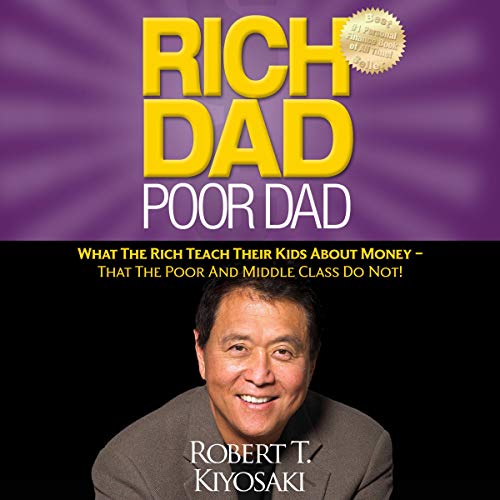
Kiyosakis Book Rebels Against Financial Norms
In a world where wealth seems increasingly elusive to achieve through conventional means alone, Robert Kiyosaki's "Rich Dad Poor Dad" offers an unconventional look at financial success that challenges the status quo. Imagine you're walking down any bustling street and overhear two men having a conversation: one father is extolling tales of entrepreneurship and savvy investments, while another shares stories about living paycheck to paycheck without much chance for wealth accumulation.
Welcome into this engaging narrative where we delve deep within the pages of "Rich Dad Poor Dad," an iconic book that has transformed how millions perceive their path towards achieving true financial freedom. What begins as a comparison between two fictional fathers eventually morphs into profound insights on what it truly takes to be financially literate and successful—revealing secrets embedded in real estate, stock market success, and the power of passive income.
The significance lies not just in its content but also in how profoundly it can alter your perspective. When one father is depicted as an entrepreneur whose wealth comes from innovation and enterprise-driven profits, while his friend's dad represents someone who has struggled financially throughout their life—this duality serves to illustrate stark contrasts that shed light on the very foundations of financial literacy.
In "Rich Dad Poor Dad," Kiyosaki not only debunks popular myths about income inequality but also provides practical advice for investors navigating today’s volatile markets. As we dive into specific strategies and investment philosophies highlighted in this book, readers will gain a clearer understanding of how to leverage their knowledge for wealth-building purposes.
From the intricate nuances of real estate investments to robust guidance on stock market success, "Rich Dad Poor Dad" offers invaluable wisdom tailored specifically for today's financial landscape. This conversation starter serves as both an exciting exploration into unconventional paths towards prosperity and an essential tool in helping you build a more secure future financially.
Are you ready? Let’s embark together on this enlightening journey where the conventional becomes anything but ordinary, revealing new opportunities to unlock your path toward true riches—whether through smart investments or innovative business ventures.
The Full Story: Comprehensive Details and Context
Rich Dad Poor Dad is Robert Kiyosaki’s 1997 book that has garnered significant attention over the years, particularly in personal finance circles. Originally released as an autobiographical account of contrasting financial advice from two fictional fathers - a rich dad who owned businesses through entrepreneurship and savvy investments, versus his poor father working hard but never securing lasting wealth – this tome aims to teach readers about building wealth through investing assets.
Key Developments: Timeline, Important Events
- 1984: Kiyosaki publishes the first edition of Rich Dad Poor Dad.
- 1997: Second Edition is released with Sharon Lechter as co-author.
- The book has since gone on to become a global phenomenon and bestseller in multiple languages.
Multiple Perspectives: Different Viewpoints, Expert Opinions
The rich dad-poor dad concept hinges heavily on Kiyosaki's interpretation of his two fictitious fathers' financial advice but also incorporates insights from several real-life experts. Critics often point out the lack of concrete strategies within the book and its reliance more on motivational storytelling than practical guidance. On one hand, readers have found it to be a powerful self-help tool for developing a mindset that embraces risk-taking and entrepreneurship as paths to wealth creation.
On the other side, many are quick to dismiss Rich Dad Poor Dad as an oversimplified guide with little actionable advice or real-world application. Financial experts such as Mark Voller of Forbes suggest taking this book with a grain of salt since it's more about financial literacy rather than offering practical solutions for building your own wealth and securing financial freedom.
Broader Context: How This Fits into Larger Trends
The rich dad-poor dad concept resonates deeply within the realm of personal finance education. It encapsulates fundamental ideas such as understanding money at a deeper, psychological level – recognizing how beliefs about ourselves or life situations can impact our decisions regarding finances and wealth-building opportunities.
Moreover, it aligns with broader trends in financial literacy that emphasize not just managing one's current income and expenses but also fostering an environment where individuals are more equipped to navigate complex financial systems. This includes understanding the importance of diversifying investments beyond traditional savings accounts or day-to-day spending, which Kiyosaki highlights through his advice.
Real-World Impact: Effects on People, Industry, Society
Rich Dad Poor Dad has had a profound impact in shaping attitudes toward personal finance and entrepreneurship among readers around the world. It's particularly significant for young individuals who might not have traditional financial education or experience from family members to guide them – thus making Kiyosaki’s advice feel like an indispensable resource.
However, its influence extends beyond just individual lives; it has also influenced investment markets, real estate sectors and overall economic thinking by presenting new perspectives on wealth creation. Moreover, the concept of adopting a mindset that prioritizes investing in assets rather than merely saving or spending can encourage financial stability as people start to think more holistically about how they spend their money.
How Do You Learn About Money? Find Practical Solutions for Financial Freedom
For someone like you who is looking to gain real-world guidance and actionable advice on personal finance, it's imperative not just to read a book but also engage actively with resources that provide hands-on experience. Here are some steps worth considering:
-
Study Basic Accounting: Understanding the basics of accounting can help demystify how different financial instruments work. This could include learning about stocks, bonds and other securities.
-
Create A Budget: Develop a detailed budget to track your spending and income accurately.
-
Explore Investment Options: Diversify beyond traditional savings accounts into real estate, stocks or mutual funds – but do thorough research before investing any of your money in these areas.
-
Attend Workshops & Seminars: Engage with industry experts who can provide insights that aren’t always evident from reading a book alone.
-
Practice Good Financial Habits: Build good financial habits like saving and paying off debt early, which are crucial for long-term wealth building.
-
Read Diverse Literature on Finance: Don't limit yourself to one or two books; explore other authors' perspectives such as Ramit Sethi’s I Will Teach You To Be Rich (about budgeting) and Tony Robbins’ Money Master The Game (to understand investing in depth).
Conclusion
While many might find the rich dad-poor dad framework inspiring, it's essential not to get carried away by its motivational appeal alone. A deeper dive into how you can practically apply these principles could provide more actionable insights tailored specifically for your situation.
Remember that wealth building isn’t necessarily about acquiring assets; rather, true financial freedom often stems from mastering the mindset and behaviors necessary for sustainable progress in managing one's finances effectively.
Summary
In "Rich Dad Poor Dad," Robert Kiyosaki's seminal work delves into the stark contrast between two fathers—his rich father who taught him financial acumen versus his poor dad with no lessons in wealth-building—but he also introduced a framework that transcends generational income disparities and personal achievements. The essence of this advice is encapsulated: it’s not about money, but how we think about money; the mindset behind our decisions.
The main insights from "Rich Dad Poor Dad" underscore the importance of financial literacy beyond just managing funds for daily needs to investing wisely in assets like stocks or real estate. It highlights that true wealth isn't merely owning many dollars—rather it's being able to generate passive income streams, invest intelligently, and allocate resources effectively.
Looking ahead, as technology continues to disrupt traditional finance sectors (e.g., cryptocurrencies entering mainstream markets), the ability to adapt financial strategies remains crucial for staying in control of one’s finances. Furthermore, understanding tax laws and regulations can be a game-changer in maximizing wealth creation opportunities without losing touch with ethical investing practices or leaving significant sums untaxed.
In terms of broader implications, Kiyosaki's teachings resonate across demographics—be they students seeking to grasp economic fundamentals early on, professionals aiming for financial independence, entrepreneurs exploring innovative business models, or anyone curious about the power of mindset transformation. The narrative shifts from a personal finance primer into a broader examination of societal wealth distribution and equitable growth.
So, as we contemplate our future in terms of money management and investment strategies, let us remember: "It's not what you know that counts; it’s how well you apply your knowledge." This notion serves both the individual striving to improve their financial standing and society looking for sustainable economic solutions. With a nuanced approach to wealth creation and preservation through informed thinking rather than raw accumulation alone—can we collectively chart paths towards greater prosperity?
In our quest for insights, will we continue to ask ourselves how much money is enough? Or are there other layers of value that can be added beyond the material realm? These reflections might just pave ways toward a more fulfilling life and perhaps even create ripple effects in societal structures.