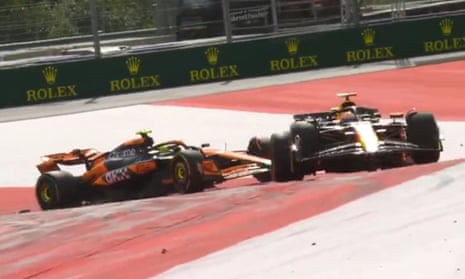
Verstappen vs Norris: F1s Most Intense Rivalry Heads To Grand Finale
Max Verstappen's relentless pursuit of Lando Norris has made for one of F1’s most compelling narratives this season—and that intrigue is only set to intensify as the grand prix nears its conclusion. This intense rivalry between two young stars in their prime will determine more than just who leaves Vegas with a coveted victory; it could reshape how we understand and analyze Formula One racing.
In recent weeks, Max Verstappen has shown why he's considered one of F1’s greatest talents: consistently outplaying his opponents like Lando Norris during the race at Las Vegas. As they enter what feels like an epic showdown, every lap counts in their quest to secure not just a win but also control over the title chase.
Lando Norris and Max Verstappen are both riding high in this thrilling battle for supremacy within F1's elite ranks. But as we zoom into these developments further, it becomes clear how tightly packed is the field when such fierce competition exists among current stars like them. Their dominance not only marks a remarkable turnaround from their rookie years but also sets up an intriguing head-to-head that will captivate fans and strategists alike.
So what can readers expect in our exploration of Max Verstappen vs Lando Norris? A deep dive into the strategies, insights, performance metrics and how racecraft is evolving to accommodate such intense head-to-head matchups. We'll unpack the technicalities behind their triumphs—whether it be aerodynamics, tire management or just sheer driver skill—and dissect what these battles say about not only current F1 trends but also where they might lead in shaping future racing innovations.
Join us as we navigate through this whirlwind of talent and strategy that will decide a championship title. The stakes are higher than ever before with three drivers vying for the throne, each bringing unique qualities to their game—let's find out why it’s all about Max Verstappen vs Lando Norris in F1 right now.
The Max Verstappen vs Lando Norris Race: A Deep Dive into Technology and Strategy in F1 Racing
The recent excitement surrounding the battle between Lando Norris and Max Verstappen has been nothing short of thrilling for fans around the world. As we look back at this intense rivalry, it's clear that both drivers have utilized advanced technological tools to gain a strategic edge over their opponents.
In light of these developments, let’s take an in-depth examination of how technology shapes F1 racing and what specific innovations are being leveraged by Max Verstappen and Lando Norris. From aerodynamics to data analytics, we’ll explore the cutting-edge technologies that have propelled them towards victory on track.
What It Is: Core Technology Capabilities
Max Verstappen and Lando Norris utilize a wide range of technological advancements in F1 racing. These capabilities include state-of-the-art telemetry systems for real-time analysis, advanced aerodynamics to optimize vehicle performance, highly efficient tire management solutions, and sophisticated simulation software used during pre-race preparation.
How It Works: Technical Explanation (Simplified)
The core technical aspects involve complex algorithms that analyze data from various sensors mounted on the cars. These include speedometers, accelerometers, gyroscopes, pressure gauges among other instruments embedded within the vehicle's structure or integrated into its bodywork and wheels.
This sensor array feeds information back to in-car telemetry teams who are able to monitor and interpret these inputs in real-time through specialized software applications running onboard computers. This data can then be relayed directly from the cockpit via satellite communications systems for further analysis by technical support staff at various control centers located across Europe and beyond.
The vehicle's aerodynamics also play a critical role, with designers implementing intricate computer models to fine-tune shape geometry – aiming to maximize downforce levels while simultaneously reducing drag forces. This results in improved grip on the track which translates directly into enhanced cornering speeds - giving drivers like Verstappen an undeniable edge when taking tight turns at high velocities.
Tire management is another key area where technology significantly impacts outcomes, as teams strive for optimal tire life and performance across multiple qualifying sessions before each Grand Prix. Sophisticated simulation models predict how different compound options will behave under varying conditions (such as temperature variations) allowing race engineers to select the best setups - ensuring maximum longevity from their assets.
Use Cases: Practical Applications & Benefits
These technological tools serve critical roles in enhancing both performance and safety on track:
-
Performance Enhancement: Real-time data monitoring allows drivers like Norris or Verstappen fine-tune their driving inputs mid-race, making subtle adjustments to maintain optimal balance between power delivery vs. aerodynamic loads.
- Tires provide essential feedback regarding wear patterns which informs strategy decisions made by pit crews during stoppage sequences (e.g., compound change), ultimately dictating whether a driver can extend his lead or potentially gain ground.
-
Safety: By identifying potential issues early, proactive measures may be taken to mitigate risks associated with vehicle performance degradation.
- For instance, should excessive heat build-up occur due high RPM operations during qualifying runs resulting in dangerously high tire temperatures; timely intervention could prevent catastrophic failures such as blowouts or premature wear compromising safety.
Comparison: How it Stacks Against Alternatives
Compared to more traditional methods of racing management (e.g., manual adjustments based on visual observation), modern technological solutions offer numerous benefits:
-
Accuracy: Telemetry systems provide precise, quantifiable data points unencumbered by human error.
- Real-time analytics enable immediate insights into vehicle behavior which would be challenging or even impossible via purely experiential means.
-
Efficiency: Automated processes streamline decision-making across multiple teams and regions saving time traditionally spent manually analyzing large amounts of raw sensory information.
Industry Impact: Disruption Potential & Future Implications
As technology continues to evolve in F1, it's shaping the very fabric of what we consider possible within this fast-paced motorsport. Recent developments are already beginning to impact beyond just on-track performance - for example:
-
Simulators: High-fidelity virtual environments simulate real-world driving experiences providing comprehensive training opportunities before live application.
- While purely theoretical applications, they serve as powerful tools used by both drivers & engineers alike during pre-race preparation phases wherein countless scenarios are tested virtually prior to actual execution in physical form.
In summary, the technological underpinnings of F1 racing are integral components propelling teams towards victory. By leveraging sophisticated sensor arrays and advanced simulation software; nimble response systems for monitoring data flow continuously throughout a race; as well as meticulously calibrated tire management protocols - drivers like Norris & Verstappen have been able to make rapid adjustments mid-race, making significant strides toward the trophy at hand.
Max's tactical acumen combined with his technical prowess has already secured numerous victories while Lando’s unwavering dedication paired with keen predictive analysis through extensive data collection and synthesis are also key factors behind their success. It remains to be seen how further innovations will reshape this intensely competitive environment but one thing is certain - technology will continue playing an indispensable role as F1 races closer towards its next grand prize winner.
Max Verstappen’s Defensive Driving Moves on Norris: A Closer Look at the Controversy
Recent controversy surrounding Max Verstappen's defensive driving moves during their duel against Lando Norris has sparked debate about rule changes and clarifications needed to address such scenarios. The incident highlighted key technical considerations in managing aggressive behavior amongst F1 drivers, sparking discussions within the racing community regarding what constitutes fair play under these conditions.
Industry Impact: Disruption Potential & Future Implications
As technology continues evolving rapidly across all sectors - including professional motorsports; there's significant potential for disruption going forward:
-
Simulation: Virtual Testing – Advanced simulations are already being employed to reduce development costs and time-to-market in car design, with AI models predicting how vehicles will behave in different real-world scenarios.
- By integrating predictive analytics & machine learning algorithms into pre-race preparation phases; teams can optimize race strategies more effectively thus lowering overall risk profiles associated with high-speed maneuvers undertaken mid-lap.
-
Data Analytics: Real-Time Analysis – Leveraging big data to gain deeper insights into driver behavior, vehicle performance metrics as well as crowd psychology influencing viewer engagement levels. This not only enhances operational efficiency within the sport but also creates new revenue streams through expanded commercial partnerships & sponsorships.
- For example; sponsors may invest heavily in brands that align with particular personalities (e.g., aggressive or smooth) represented by certain racers, thereby driving increased brand visibility amongst target demographics.
-
Safety: Autonomous Vehicles – Emerging technological trends towards fully autonomous F1 cars represent a significant paradigm shift wherein vehicles operate autonomously without direct human intervention. This could potentially eliminate many of the current risks posed to both drivers & spectators alike while simultaneously enabling more exciting racing experiences devoid of physical hazards.
- Self-driving tech may also pave way for novel safety features (such as automated braking systems) integrated into modern cockpit instrumentation aimed at mitigating accidents resulting from loss-of-control situations.
In conclusion, F1's ongoing quest towards technological advancement isn't confined merely within confines of on-track performance improvements. Rather; it extends far beyond traditional motorsport parameters encompassing areas like real-time analytics & simulation for enhanced decision-making processes - all while ensuring the sport remains safe and accessible to future generations.
It’s exciting times as we look toward what lies ahead in F1 racing where technology will continue driving boundaries further than ever thought possible. Stay tuned!
Summary
In wrapping up our deep dive into Max Verstappen vs Lando Norris, it’s clear that these two young stars have pushed the boundaries of F1 racing to new heights with their relentless competition.
Their high-stakes battles showcase how technology has become an integral part of modern motorsport strategy—whether through state-of-the-art telemetry systems or sophisticated simulation tools. These advancements have transformed both performance optimization and safety measures, allowing drivers like Verstappen and Norris to make real-time adjustments mid-race that can drastically impact the outcome.
The controversy surrounding Max's defensive moves has also underscored the need for clear rules in F1 racing, leading to potential future rule changes aimed at addressing such scenarios. It’s a testament to how quickly technology evolves within this sport, enabling teams and drivers alike to leverage its full potential while maintaining integrity on track.
Looking ahead, we can expect even more innovations as F1 continues pushing the envelope of what's possible in motorsport. From simulated testing environments that reduce development costs to autonomous vehicle concepts poised for future integration—these developments will not only elevate performance but also redefine spectator experiences beyond mere viewing rights.
As Max Verstappen and Lando Norris continue their riveting journey, it’ll be fascinating to see how these technologies evolve together with the drivers themselves. It raises thought-provoking questions about what other boundaries can F1 break next—be they in terms of technological advancement or human performance limits?
In a world where technology is constantly accelerating its pace towards us, staying ahead means being adaptive and embracing change. Max Verstappen vs Lando Norris represents precisely this spirit - two brilliant minds navigating the ever-evolving landscape of Formula One together.
So as we say goodbye to our exploration into their thrilling saga, here’s hoping that 2025 remains a memorable year for F1—and just imagine what exciting journeys may lie ahead.