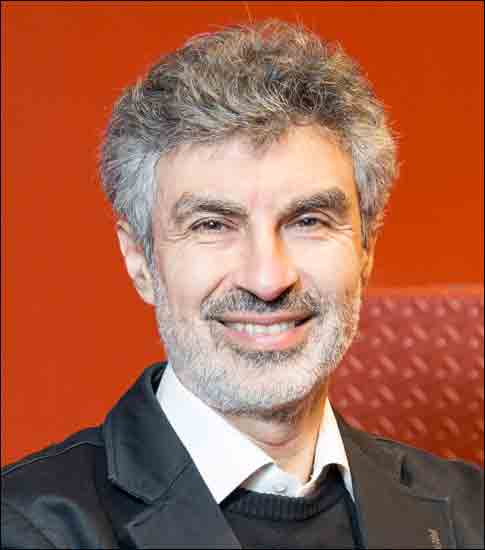
Yoshua Bengio: Luminary of Deep Learning Innovations
In a world increasingly dominated by complex algorithms and artificial intelligence, one individual stands out as an intellectual luminary at the forefront of machine learning innovations—Yoshua Bengio. His contributions to deep learning have transformed how we understand AI systems today.
Imagine this: in 1964, Yoshua Bengio was born into a world where computers were still mythical. Fast forward through decades of technological advancements and setbacks—a time when artificial intelligence seemed more like an esoteric dream than real-world tech—and you find ourselves at the crux of modern computing revolution. Today, as we navigate the digital age with AI powering everything from voice assistants to autonomous cars, Yoshua Bengio’s work has been pivotal.
Yoshua is not just a researcher; he's a visionary who laid down the foundational stones for deep learning—a branch of machine learning that inspired breakthroughs in natural language processing and computer vision. His contributions have reshaped how we interact with technology and opened up new avenues for research, applications, and imagination.
But what sets Yoshua apart is his relentless curiosity towards solving complex problems. It’s not merely about the theoretical aspects; it's also about practical implications—how can these technologies benefit humanity? This blend of technical brilliance and humanitarian spirit has made him a beacon in an industry that often struggles with such balancing acts.
Now, armed with this context on Yoshua Bengio—a name synonymous with deep learning—you’ll embark on discovering his groundbreaking contributions. From the inception to current applications, we'll explore how he paved paths for AI's future development, inspired new generations of researchers and developers, and reshaped industries across sectors—from healthcare to education.
Join us as we delve into a narrative that will illuminate Yoshua Bengio’s journey through time—tracing his intellectual odyssey from humble beginnings in Canada all the way up till today. Discover why he is more than just another name; he is an essential architect of our digital future.
The Full Story of Yoshua Bengio’s Contributions and Impact on AI
Yoshua Bengio is one of the most influential figures in artificial intelligence (AI). Born March 5, 1964, he began his career as a professor at Université de Montréal where he has made groundbreaking contributions to machine learning. His work laid foundational stones for deep learning—a field that revolutionized how we understand and design AI systems.
Key Developments
-
2018 ACM A.M. Turing Award: Bengio, Geoffrey Hinton, and Yann LeCun were jointly awarded the 2018 ACM A.M. Turing Award together with Martin Estermann for their foundational work on deep learning.
-
Mila: Founded in Quebec by Bengio as a nonprofit AI institute, Mila became its scientific director until January 31, 2025.
Multiple Perspectives
Yoshua Bengio’s impact extends beyond academic circles. He has been quoted saying:
"The most important innovation is not the technology itself but how it changes society."
- Geoffrey Hinton: Co-founder of deep learning and a collaborator with Yoshua, he shared his observations about AI's potential hazards.
Broader Context
In Bengio’s own words: “I am interested in ethical aspects. I hope that my work will not be used to dominate the world or humanity.” This sentiment underscores how crucial it is for researchers like him to consider both technical and societal implications of their discoveries.
- OpenAI Controversy: A notable instance highlights Bengio’s stance on AI development: He expresses concern about companies like OpenAI potentially keeping superintelligent AI technology secret.
Real-World Impact
Yoshua Bengio's work has real-world impact, influencing everything from healthcare to education. His research fuels innovations such as autonomous vehicles and image recognition technologies, which are changing industries at a rapid pace.
In an interview with MIT Technology Review:
“AI is going to be everywhere,” says Yoshua Bengio about the future of AI integration into everyday life.
Moreover, his work has inspired numerous researchers like Geoffrey Hinton who shared their insights on deep learning in a groundbreaking paper published together. Their collaboration and influence continue to shape this field.
Yoshua's contributions aren't limited; he also emphasizes fairness and transparency within AI systems:
"We have the chance right now to ensure that our work is beneficial, rather than harmful," Bengio asserts.
By focusing on ethical guidelines for AI development, Yoshua helps prevent future misuse of technology. As one of the most-cited scientists globally across all fields (by total citations), his impact extends far beyond academia.
Conclusion
Yoshua Bengio stands as a towering figure in artificial intelligence, guided by both technical acumen and an acute sense for societal consequences. His work continues to shape future innovations while advocating prudent use of AI technologies. As we look towards the next decades of technological advancements, Yoshua’s leadership remains central.
Stay tuned for part two where we explore deeper into his contributions, perspectives from experts on his research's applications, and how he navigates challenges in a rapidly evolving landscape.
For now though, let us celebrate one of AI’s most celebrated 'Godfathers', keeping their vision alive as they guide humanity towards smarter technologies.
Summary
As we wrap up our exploration of Yoshua Bengio's profound impact in artificial intelligence (AI), it’s clear that he stands as a pivotal architect guiding the future of this transformative field.
Through his pioneering work on deep learning, Bengio has not only advanced AI systems to unparalleled levels but also emphasized their ethical and societal implications. His concern for how technology is used highlights the importance of responsible innovation—an imperative we must all strive towards.
Looking ahead, key areas to watch include advancements in fairness within AI models, ensuring they don’t perpetuate bias or discrimination. Another area ripe with promise is explainable AI—developing technologies that make their decision-making processes transparent and understandable for humans, allowing us to trust them more fully.
Yoshua's journey has also underscored the importance of interdisciplinary collaboration. His work at Mila brings together computer scientists, social scientists, ethicists, and policymakers under one roof—a model others can adopt if they seek meaningful impact in AI development.
But perhaps most thought-provoking is his ongoing commitment to ethical considerations when working with powerful technologies like superintelligent AI. As he advocates for a future where such innovations serve humanity rather than dominate or harm it, Bengio provides us all with invaluable guidance on the path forward.
In closing, as we reflect on Yoshua Bengio’s contributions and foresight in AI, one question lingers: How can we honor his legacy by both leveraging technological advancements responsibly AND ensuring they uplift our society? Only then will we truly do justice to those whose work lights the way.